The three studies in this issue were formally published between October 14 and 15, 2026, and coverage of them clustered on October 21. The US National Cancer Institute used a cohort of 460,000 people to test the association between ultra-processed foods and colorectal cancer; the University of Warwick inferred from spectra the colours white dwarfs would show to the human eye; and a team from Microsoft Research and other institutions used machine learning to correct weather forecasts 3 to 4 weeks ahead. All three results have clearly defined limits of applicability.
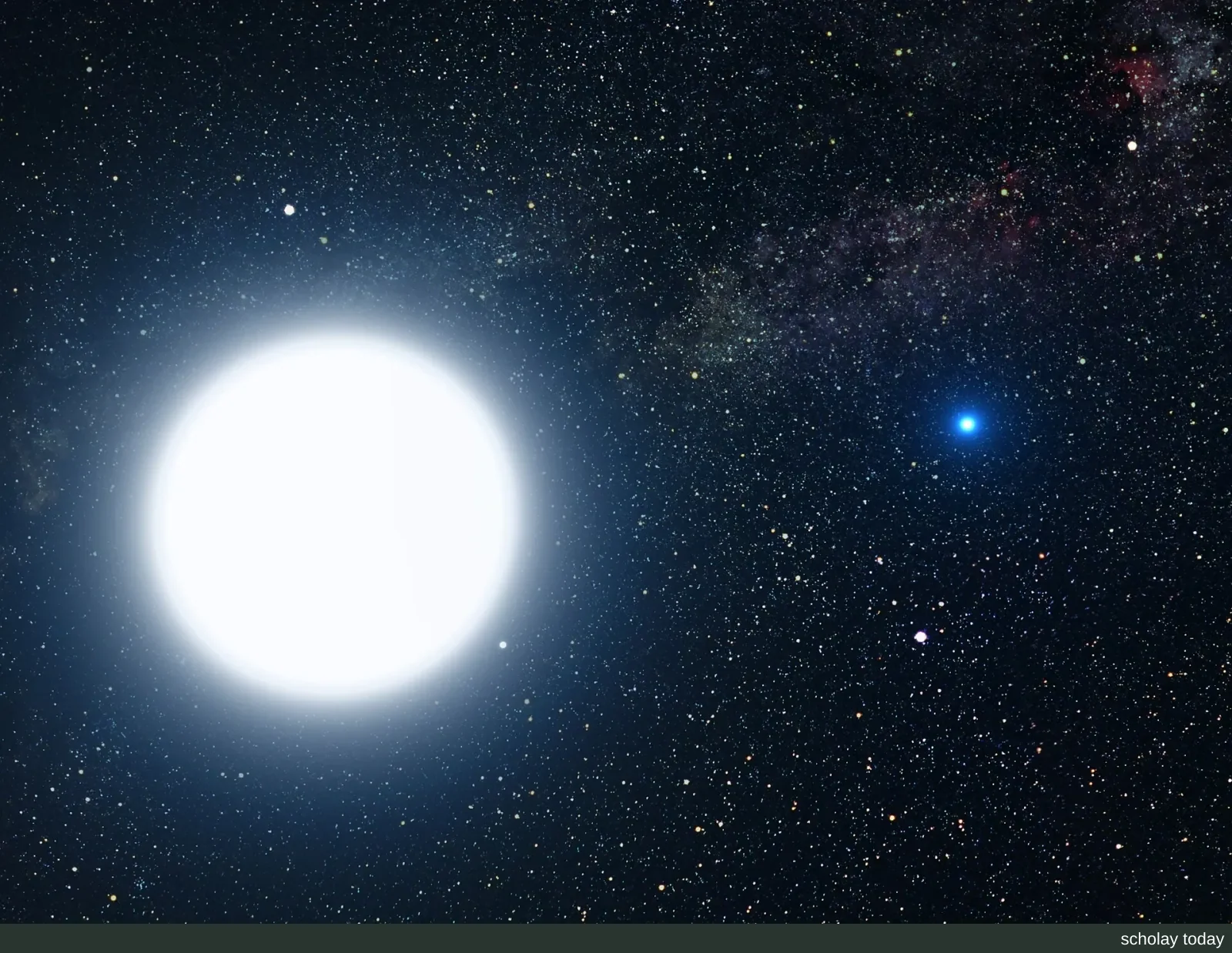
An artist’s impression of Sirius A and its white dwarf companion Sirius B (the small bright dot on the right), not an actual photograph. Sirius B is very hot and blue-white; the green and pink white dwarfs mentioned in the text are a small number of cooler cases with unusual atmospheric compositions. Image: NASA, ESA and G. Bacon (STScI), public domain, via Wikimedia Commons.
Total ultra-processed food intake shows no association with colorectal cancer
The study was carried out by Erikka Loftfield’s team at the US National Cancer Institute (NCI) and published in PLOS Medicine on October 15, 2026. The data come from the NIH-AARP Diet and Health Study: 461,682 US adults who enrolled in 1995—1996, were then aged 50 to 71 and free of cancer, and completed a 124-item food frequency questionnaire at enrolment. The researchers used the Nova classification system to assign the foods in the questionnaire to categories such as ultra-processed foods, and followed participants up to 2018, with a median follow-up of 18.8 years, during which a total of 10,075 cases of colorectal adenocarcinoma were diagnosed.
Participants were divided into five groups by ultra-processed food intake (grams per 1000 kcal of diet). The hazard ratio for colorectal cancer in the highest group relative to the lowest was 0.97 (95% confidence interval 0.91–1.03), so no association was observed overall. Broken down by specific foods, the directions were not consistent: higher intakes of bread, frozen desserts and dairy-based drinks, and breakfast cereals were associated with lower incidence, whereas higher intakes of reconstituted meat and fish products were associated with higher incidence (hazard ratio 1.10). In this population, 82.8% of whole grains and 74.3% of processed meat came from ultra-processed foods. The authors consider that, viewed in terms of nutrient content, the results are consistent with current colorectal cancer prevention advice: higher intakes of whole grains, dietary fibre, dairy products and calcium, and lower intake of meat, correspond to lower incidence. The model also estimated that replacing 10% by weight of ultra-processed foods with minimally processed foods was associated with a 2% lower colorectal cancer incidence (hazard ratio 0.98).
This is an observational cohort study. It can show only associations; it cannot prove that any type of food causes or prevents colorectal cancer, nor can it be taken to mean that ultra-processed foods as a whole are harmless. It analysed only colorectal cancer and does not address other diseases. Diet was surveyed only once, at enrolment, yet over the following twenty-plus years both participants’ eating habits and the ultra-processed foods on the market changed. The questionnaire was originally designed to estimate nutrient intake and cannot distinguish differences in degree of processing, such as between sweetened and plain yoghurt. Participants were mainly older white Americans, so the conclusions may not apply to younger or more ethnically diverse populations.
A few white dwarfs appear green or pink to the human eye
The paper by Mark Hollands, Boris Gänsicke and Pier-Emmanuel Tremblay of the University of Warwick and Detlev Koester of Kiel University was published in the Royal Astronomical Society journal RAS Techniques and Instruments; the University of Warwick issued a press release on October 15, 2026, and Nature ran a research highlight on October 21. White dwarfs are the dense remnants left at the end of the evolution of Sun-like stars. The colour of an ordinary star is determined essentially by its temperature, ranging from orange through white to pale blue. But the atmospheres of the coolest white dwarfs can reach densities of about 1 gram per cubic centimetre, and if they contain elements such as carbon, calcium and sodium, the absorption lines are extremely broadened, the spectrum departs markedly from a black body, and the colour changes accordingly.
No white dwarf is close enough for anyone to see the colour of its disc directly, so the team fed existing spectra and atmospheric models into a model of human colour vision to calculate “what colour the human eye would see if it were close enough”. The results show that carbon-rich white dwarfs are mostly pink or purple, those that have accreted debris from asteroids and comets are yellowish, and cooler mixed hydrogen–helium atmospheres lean towards cyan. WD J1330+6435, at about 4000 degrees Celsius, has accreted rocky material and has calcium, lithium and sodium in its atmosphere; in the model it appears yellow-green, and the authors state that, to their knowledge, no star has previously been credibly reported as green. WD J1011+2845, 48 light-years from Earth, has had carbon from its core brought to the surface by convection; almost all of its light falls at wavelengths beyond 600 nanometres, and it appears a deep salmon pink.
Unusual colours are not common. Of the 151 white dwarfs within 20 parsecs (about 65 light-years) of Earth, 5 have unusual colours (2 yellowish, 3 pinkish), roughly one in thirty; the remaining 146 have a median correlated colour temperature of about 6800 K and simply look white to the human eye. The authors point out that the common impression that “white dwarfs are bluish” comes from an observational selection effect: hotter, bluer white dwarfs are brighter and are over-represented in surveys selected by brightness. Note that these colours are perceived colours calculated from spectra and models, not photographs taken directly, and the “one in thirty” figure comes only from the nearby sample of 151 stars. The paper appears in a journal focused on methods and instrumentation, and its core contribution is a method for deriving the visible colours of stars from their spectra.
Machine learning corrects weather forecasts three to four weeks ahead
Subseasonal forecasting refers to weather forecasts made 2 to 6 weeks in advance. Such forecasts are useful for agriculture, water resources, energy dispatch and disaster prevention, but model errors accumulate over time and forecast skill drops sharply beyond two weeks. On October 14, 2026, Hannah Guan, Soukayna Mouatadid, Lester Mackey and colleagues published an open-access paper in Nature proposing a “probabilistic bias correction” (PBC) framework; Nature ran a research briefing on the study on October 21.
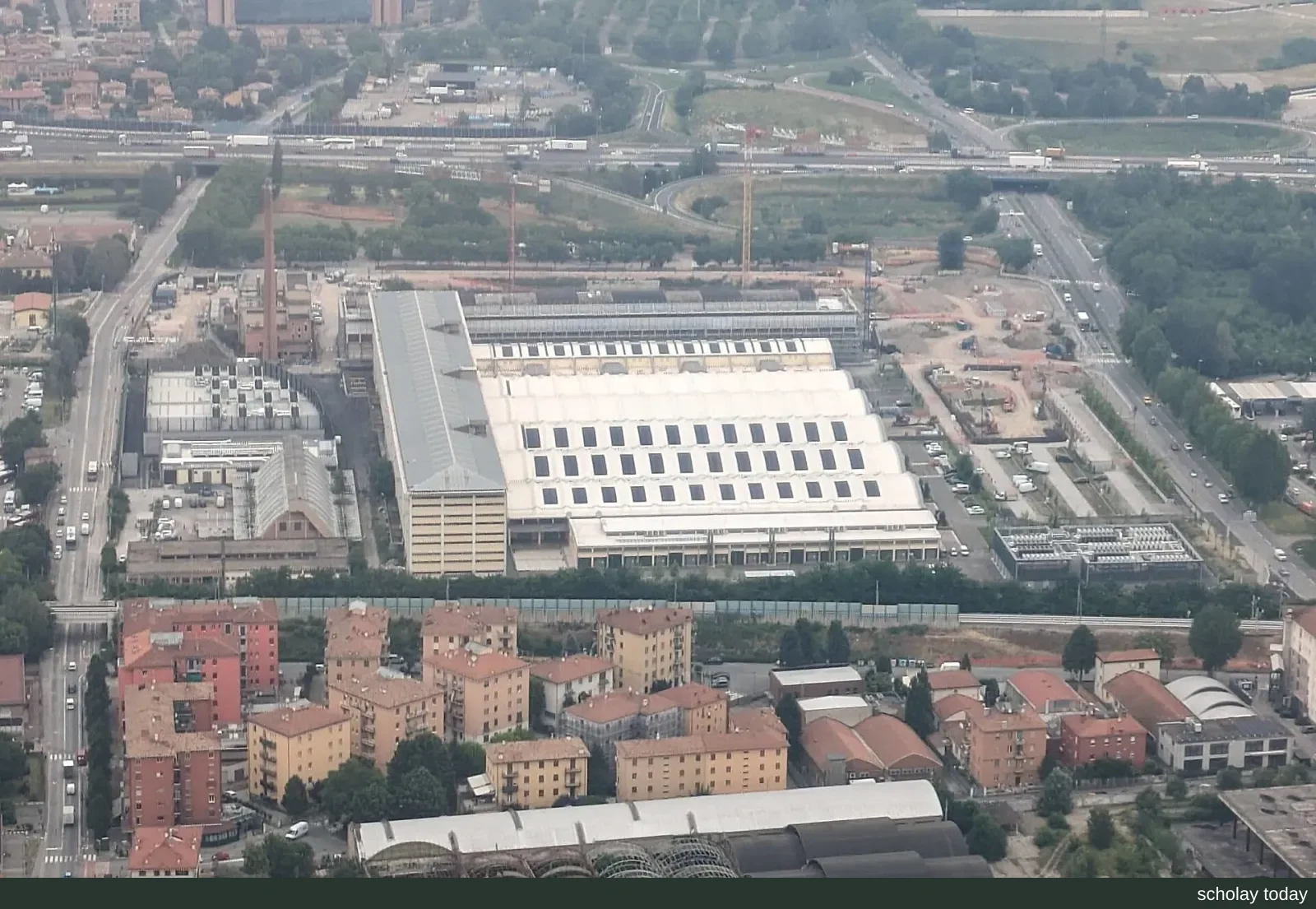
Aerial view of the European Centre for Medium-Range Weather Forecasts (ECMWF) campus in Bologna, Italy. The forecasts the paper corrects with PBC are precisely ECMWF’s dynamical ensemble forecasts and its AI forecasting system. Photo: Reddalo, CC BY-SA 4.0, via Wikimedia Commons.
PBC is not a new weather model but a post-processing method: it takes ensemble forecasts from any dynamical or AI model and, drawing on that model’s historical forecasts, past observations and climatology, learns to correct systematic biases in the forecast probability distribution. Specifically, the work is done by two lightweight models in parallel: Debias++ corrects biases by location, date and quantile, while Persistence++ incorporates recent observations and seasonal effects, and the two outputs are then combined. The evaluation targets are land 2-metre temperature, land precipitation and mean sea-level pressure in week 3 (days 19–25) and week 4 (days 26–32), with ERA5 reanalysis data used as ground truth and the ranked probability skill score (RPSS) used to measure improvement relative to the climatological average.
In hindcast tests over 2016—2024, using PBC to correct the dynamical ensemble forecasts of the European Centre for Medium-Range Weather Forecasts (ECMWF) improved skill, relative to the debiasing method the centre uses operationally, for 91% of pressure, 92% of temperature and 98% of precipitation forecast targets; applied to ECMWF’s AI forecasting system AIFS-SUBS, it doubled average skill in 2025. Under the name “MicroDuet”, the team entered AI Weather Quest, ECMWF’s 2025 real-time competition, and achieved the highest scores across all variables and lead times in the September–November season, outperforming the dynamical models of six operational forecasting centres, their multi-model ensemble, ECMWF’s AI model and 34 teams worldwide.
These gains must be understood against a very low starting point. An RPSS of 1 represents a perfect forecast, while 0 is equivalent to guessing from past-year averages; most of the baseline skill scores reported in the paper lie between 0.03 and 0.19, and the average skill of AIFS-SUBS before doubling was only 0.03. In other words, the corrected forecasts beat the climatological average more often, but are still a long way from accurately foreseeing the weather three to four weeks ahead. PBC depends on the input model’s historical forecasts and on ERA5 data; the real-time competition results come from the 2025 season, and the advance forecast of the December 2025 cold wave in the eastern United States mentioned in the paper is only a single case.
References
-
Abar L, O’Connell CP, Hong HG, et al. Associations of food processing and dietary risk factors with colorectal cancer incidence in the NIH-AARP Diet and Health Study: A cohort study. PLOS Medicine, 2026, 23(10): e1005251. Published 2026-10-15. doi:10.1371/journal.pmed.1005251
-
PLOS. Massive study of 460,000 people challenges ultra-processed food cancer fears. ScienceDaily, 2026-10-21. Link
-
Hollands MA, Gänsicke BT, Tremblay P-E, Koester D. Any colour you like: the diverse chromaticities of white dwarfs. RAS Techniques and Instruments, 2026, 5: rzag069. doi:10.1093/rasti/rzag069
-
University of Warwick. Green, pink and purple: astronomers reveal the surprising true colours of white dwarf stars. 2026-10-15. Link
-
Surprise! White dwarf stars come in a rainbow of colours. Nature Research Highlight, 2026-10-21. Link
-
Guan H, Mouatadid S, Orenstein P, et al. Advancing subseasonal forecasting with machine learning. Nature, 2026, 658: 951–957. Published 2026-10-14. doi:10.1038/s41586-026-11126-x
-
An AI tool improves weather forecasts up to a month ahead. Nature Research Briefing, 2026-10-21. Link
-
Compiled and published by Scholay, the one-stop academic platform. If any content infringes your rights, please let us know and it will be taken down.
-
Also published on EnterScholar, a community for scholars in the intelligent era.